Refactoring to CQRS

cqrs-kulendayz.tpetrina.dev

About me 👋

  • Toni Petrina
  • SRE @ Visma e-conomic
  • github.com/tpetrina
  • @tonipetrina1

What is CQRS?

Command Query Responsibility Segregation

Or in its weaker form Command Query Segregation (CQS)

Simply put

  • separate commands (operations that change data) from queries (operations that read data).

Can be done at:

  • code level - requires diligence (sometimes libraries can help)
  • architecture level - harder, but more benefits

How we do it today?

  • "Services" mix read and write operations
  • GETs that modify (referential transparency)
  • Lack of common interface between "operations"

An aside

In n-tier architecture, operations are clustered - all operations on User go in UserService and UserRepository

Hard to do higher-order operations e.g. decorators.

// No similarity between methods
public class UserService {
public UserDto GetUser(int id) {}
public IEnumerable<UserDto> GetUsers(int id) {}
}
public class OrganizationService {
// No similarity between this and GetUser
public OrganizationDto GetOrganization(Guid id) {}
}

An aside - example

Motivation

  • In CRUD domain entites are resources
  • Most UIs are task based and expressive, REST is not (but RPC is)
  • REST is incompatible with task based approach (but RESTful isn't)
class UserController
{
[HttpGet]
ActionResult<UsersDto> GetUsers() { /* */ }
[HttpGet]
ActionResult<UserDto> GetUser(UserId) { /* */ }
[HttpPost]
ActionResult<UserId> CreateUser(UserDto) { /* */ }
[HttpPut]
ActionResult<Unit> UpdateUser(UserDto) { /* */ }
[HttpDelete]
ActionResult<Unit> DeleteUser(UserId) { /* */ }
}

Simple RESTful UserController

Another problem with non-semantic entry points

  • Controllers have generic actions
  • Services have generic interface
  • Database have generic mapping (generic repository pattern)
  • Which leads to anemic domains and lots of boilerplate
  • Services, repositories and controllers are too similar, but can't be unified (role vs header interface)

Questions

  • How to know what is updated?

    • Update email must have confirmation flow
    • Update password is not the same as changing email preference
  • Fetching data is too generic

    • Overfetching is rampant
    • Hard to match fetch/update methods

CQRS is often combined with:

  • DDD - why aren't you using it anyway?
  • Event Sourcing - beyond the scope

Let's refactor!

record ChangeEmailDto(string NewEmail);
// new
class UserController {
[HttpPost("change-email")]
ActionResult<bool> ChangeEmail(ChangeEmailDto dto) {
return _userService.ChangeEmail(dto);
}
}
// vs
class UserController {
[HttpPut("user/{id}")]
ActionResult<Unit> UpdateUser(UserDto) { /* */ }
}

Semantic actions

interface IUserService {
/* */
bool ChangeEmail(ChangeEmailDto dto);
/* */
}
class UserService : IUserService {
/* */
bool ChangeEmail(ChangeEmailDto dto)
{
/* */
}
/* */
}

Implementation in the service layer

class UserService {
UserService(
IUserRepository userRepository,
IEmailService emailService,
IStorage storage
) {}
bool UpdateInfo() { /* */ }
bool ChangeEmail() { /* */ }
bool UploadAvatar() { /* */ }
bool RemoveAvatar() { /* */ }
}

Explosion of dependencies

Problem

  • Becomes repetitive in different sense
  • Service layer essentially becomes namespace/module
  • Performance hit in the request DI build-up phase
  • Proliferation of get methods - semantic ones (but it might be good!)
interface IUserService
{
/* */
bool ChangeEmail(ChangeEmailDto dto);
/* */
}
// actually typed as:
// ChangeEmailDto => bool

Start with the original method

// let's introduce command instead of Dto
class ChangeEmailCommand
{
int UserId { get; }
string NewEmail { get; }
}

Obvious intention and data (serializable method call)

// and the handler
class ChangeEmailHandler
{
ChangeEmailHandler(
/* dependencies */
)
{}
bool Execute(ChangeEmailCommand command)
{
/* */
}
}

Handling commands is isolated

interface IUserService
{
/* */
bool ChangeEmail(ChangeEmailDto dto);
/* */
}
// =>
class ChangeEmailHandler
{
bool Execute(ChangeEmailCommand command) { /* */ }
}

Refactoring to command

// marker interface
interface ICommand {}
// generic handler
interface ICommandHandler<TCommand>
where TCommand : ICommand
{
bool Execute(TCommand dto);
}
// our implementation
class ChangeEmailHandler
: ICommandHandler<ChangeEmailCommand>
{
bool Execute(ChangeEmailCommand command) { /* */ }
}

Refactoring to command

class UserController
{
[HttpPost("change-email")]
ActionResult<bool> ChangeEmail(
[FromBody] ChangeEmailDto dto,
[FromServices] ChangeEmailHandler handler)
{
var command = new ChangeEmailCommand(CurrentUser, dto.NewEmail);
return handler(command);
}
}

Time to update our user controller

class UserController
{
ICommandHandler<ChangeEmailCommand> handler;
UserController(ICommandHandler<ChangeEmailCommand> handler)
{
this.handler = handler;
}
[HttpPost("change-email")]
ActionResult<bool> ChangeEmail([FromBody] ChangeEmailDto dto)
{
var command = new ChangeEmailCommand(CurrentUser, dto.NewEmail);
return handler(command);
}
}

Use Dependency Injection

Should Dto actually be a command?

  • Easier to evolve separately (contract)
  • Enrich command from ambient (e.g. controller) data
  • Merge route parameters and body

Some design decisions

  • Naming: Execute, Handle, Do, _
  • Return type: void, Task, Task<Either<Error, Unit>>, Task<Result>
  • Manual construction of handlers vs DI

On the query side

  • Similar interface IQuery<TQueryResult>
  • Similar handler IQueryHandler<TQuery, TQueryResult>
  • Also known as query object pattern

Meanwhile... on the query side of my architecture

Why are repositories bad?

  • Either you specialize them too much or have generic repository
  • Not all reads are equal
  • Specification pattern can be replaced with query object pattern
  • Reading in commands is different than reading from the client!
class UserRepository
{
UserDto[] GetUsers();
UserDto GetUser();
UsersDto GetUserForAccount(int accountId);
UsersDto GetArchivedUsers(int accountId);
/* */
}

Either you specialize them too much or have generic repository

class UserRepository {
// for HttpGet
// mapping required, not all data needs to be present
// /user/1
// or as a lookup
UserDto GetUser();
// enriching (JOINs)
// /me
UserDtoWithNotifications GetUserWithNotifications();
/* */
}
public class UserDto {
int Id { get; }
string Name { get; }
// have fun with nullable
IEnumerable<UserNotificationDto>? Notifications { get; }
}

Not all reads are equal

class UserRepository
{
// specification is custom for each repository
// combinatorial explosion
// lack of predictability
// tedious to implement
// might as well switch to IQueryable
UserDto[] GetUsers(UserSpecification specification);
}

Specification pattern can be replaced with query object pattern

class UserRepository
{
// for HttpGet
// mapping required, not all data needs to be present
// not tracked by EF
UserDto GetUser();
// for updating user (domain model)
// tracked by EF
UserEntity GetUser();
/* */
}

Reading in commands is _different_ than reading from the client!

Recap - read models

  • Hydrate for command
  • Lookup data for command handler (validation or reference)
  • A view for UI or report
  • Admin view (for all) vs user view (for me) - multi-tenant scenarios

Query objects are powerful

  • Avoid using domain model completely!
  • Can use raw SQL (or Dapper as opposed to EF in the command model)

    • Use views!
  • Caching can be done only for this layer
record GetActiveUsersResult();
record GetActiveUsersQuery : IQuery<GetActiveUsersResult>;
class GetActiveUsersHandler
: IQueryHandler<GetActiveUsersQuery, GetActiveUsersResult>
{
// use Dapper
IConnection connection;
GetActiveUsersHandler(IConnection connection)
=> this.connection = connection;
GetActiveUsersResult Execute(GetActiveUsersQuery query)
{
return connection.Query<GetActiveUsersResult>(
"SELECT * FROM Users WHERE IsActive = 1");
}
}

An example query

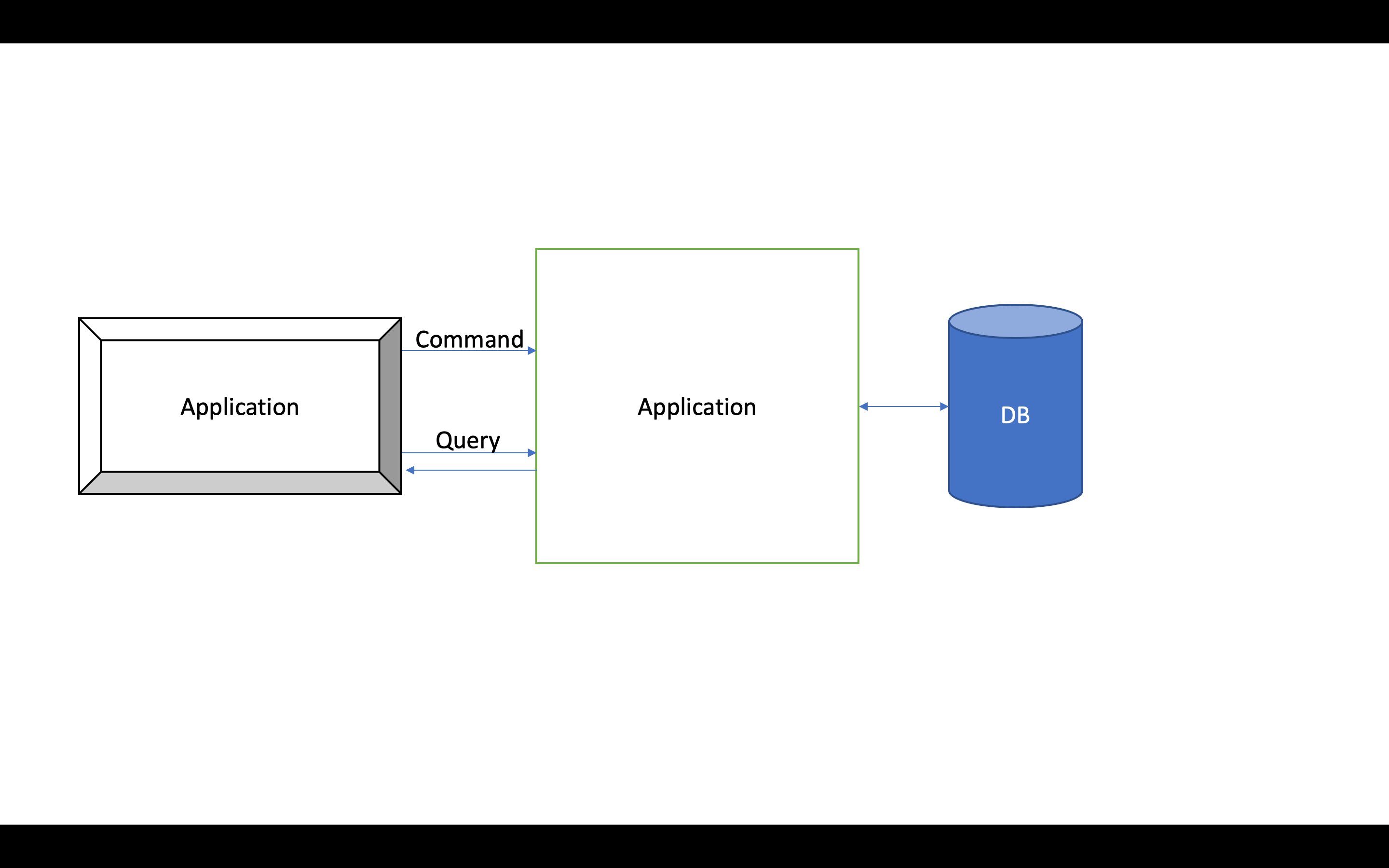
So if read layer can look differently...

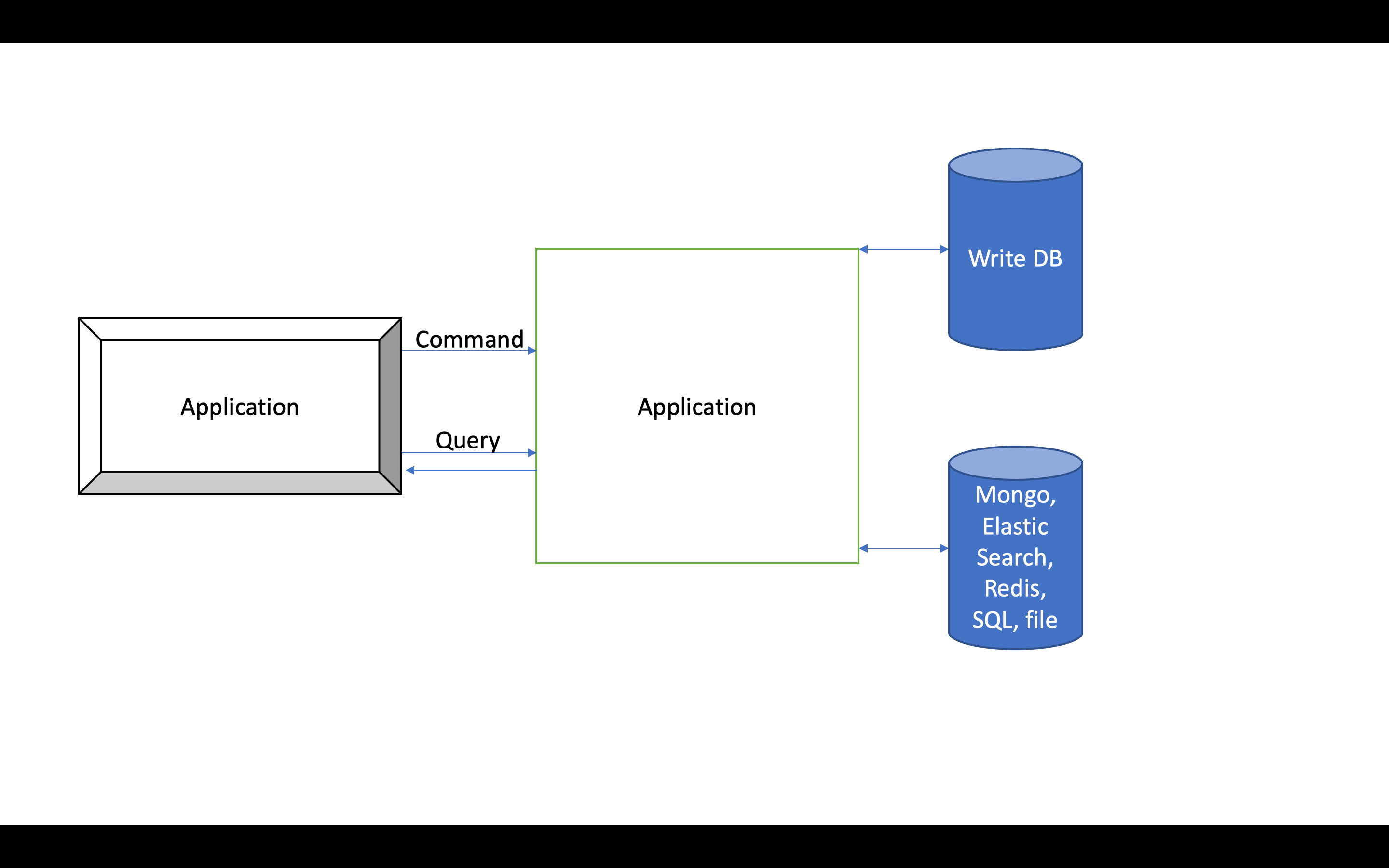
Separating databases

  • SQL -> use replication and have replica used in the read model
  • Use different database for read (Mongo, Elastic Search)
  • Key idea is that we can split read from write model

    • Not all applications have similar load on the read/write
    • Read model can be simplified (document) while modifications are done on the normalized database
Example 1: digital signage application

  • CMS for editing media items, playlists, channels
  • Items in multiple playlists, playlists in multiple channels (normalized model, rare writes)
  • End devices pick channel and play schedule (poll for update, JSON document)
  • Update [dbo].[Schedule] on every change

Example 2: static content for mobile app

  • CMS for editing pages and their content
  • Devices poll for updates
  • Manual publishing - [dbo].[Cache] - it might take a minute

Spectrum of options:

  • Just separate commands and queries
  • Use optimized queries/views for reads
  • Add columns for caching
  • Add tables for caching
  • Different SQL instances (replicas)
  • Different DB technologies

Adopting CQRS increases performance

  • Faster to reason with (self-contained code)
  • Faster to run (smaller DI graph)
  • More manageable code (append only files, less conflicts)
  • Easier to test

Testability

class TestUsers
{
[Fact]
void User__CanChangeEmail()
{
// Arrange
var handler = new ChangeEmailHandler();
var command = new ChangeEmailCommand(1, "[email protected]");
// Act
var result = handler.Execute(command);
// Assert
result.Should().BeTrue();
}
}

Unit testing is easy

[Test]
void UnverifiedNewUser__CannotCreateTasks()
{
// Arrange
new CreateUserCommandHandler().Execute(
new CreateUserCommand("user@email.com));
// Act
var result = new CreateTaskCommandHandler().Execute(
new CreateTaskCommand(
name: "Task name",
label: "Green"
));
// Assert
result.Should().BeFalse();
}

Easy to do integration tests!

[Test]
void VerifiedNewUser__CannotCreateTasks()
{
// Arrange
var id = new CreateUserCommandHandler(/* ... */);
new VerifyUserCommandHandler()
.Execute(new VerifyUserCommand(id));
// Act
var result = new CreateTaskCommandHandler()
.Execute(new CreateTaskCommand(
name: "Task name",
label: "Green"
));
// Assert
result.Should().BeTrue();
}

Easy to do integration tests!

But that's not all!

Decorators on commands extract cross cutting concerns.

class EFTransactionHandler<TCommand>
: ICommandHandler<TCommand>
{
EFTransactionHandler(
DbContext context,
ICommandHandler<TCommand> handler)
=> (this.context, this.handler) = (context, handler);
bool Execute(TCommand command)
{
using (var transaction = context.Database.BeginTransaction())
{
handler(command);
transaction.Commit();
}
}
}

Handler returns another handler!

var handler = new EFTransactionHandler<ChangeEmailCommand>(
_context,
new ChangeEmailHandler(/* ... */)
);

Example usage

Use a library

  • MediatR for C#
  • Helper classes in testing

Takeaway

Refactoring traditional "service" object to CQRS involves separating the read part from the write part. After that, write part is split into task based methods as opposed to resource based methods. We can have multiple POST/PUT/PATCH methods that have semantic meaning.

Questions?

Thank you!

  • Toni Petrina
  • @tonipetrina1

cqrs-kulendayz.tpetrina.dev